Seven of the most common furniture installation mistakes on site
Almost every expensive mistake comes not from a lack of skill but from a skipped check. What we see most often and how to avoid it.
1. Trusting the drawing without measuring
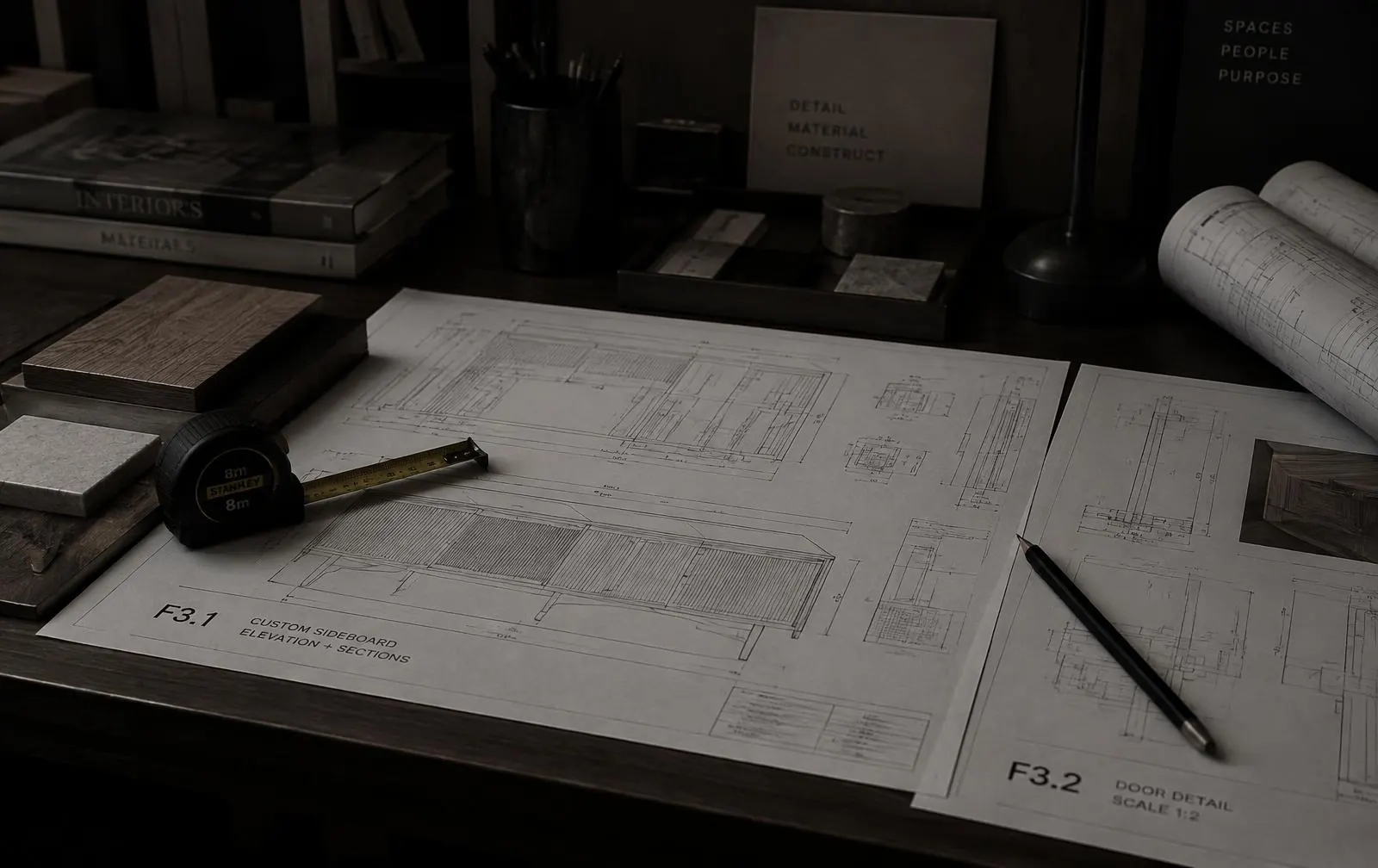
A drawing shows intent; the site shows reality. A control measurement before production and again before installation takes an hour and often saves several days. We measure not once at mid-height but at three heights and both ends, and we always check the diagonals.
2. Installing into an unfinished space
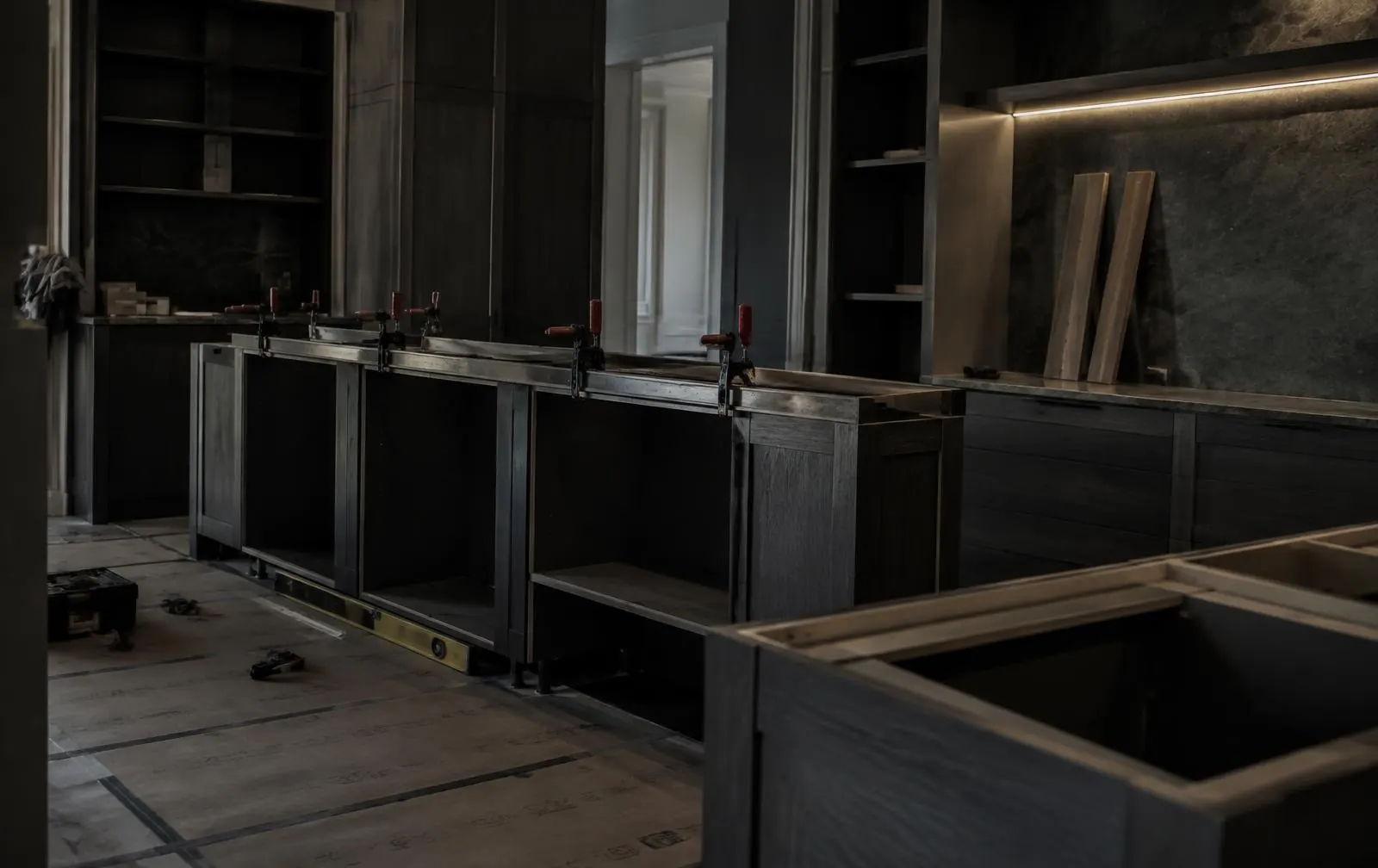
Furniture installed before floors, painting or finishes will almost always be moved. Every move risks the surface and the geometry. If the schedule forces an early installation, it must be a conscious decision with planned protection and an extra adjustment phase at the end.
3. Uncoordinated appliance integration
Integrated appliances have their own requirements for ventilation, clearances and door opening angles. These are checked before the carcass is assembled, not after. The most common mistake: an oven whose door hits the neighbouring drawer front, or a fridge with no air path above it.
4. The wrong fixing into the wall
Plasterboard, aerated block and structural concrete each require a different fixing. A tall unit or wall modules with a stone-composite top cannot hang on a universal plug. Before drilling we verify the wall build-up and, when needed, ask for a fixing substrate to be installed.
5. Missing protection
One scratch on a lacquered front costs more than protecting the whole site for the entire installation period. Add dust settling into fresh sealant and metal parts placed straight onto a stone worktop.
6. Leaving hardware adjustment for later
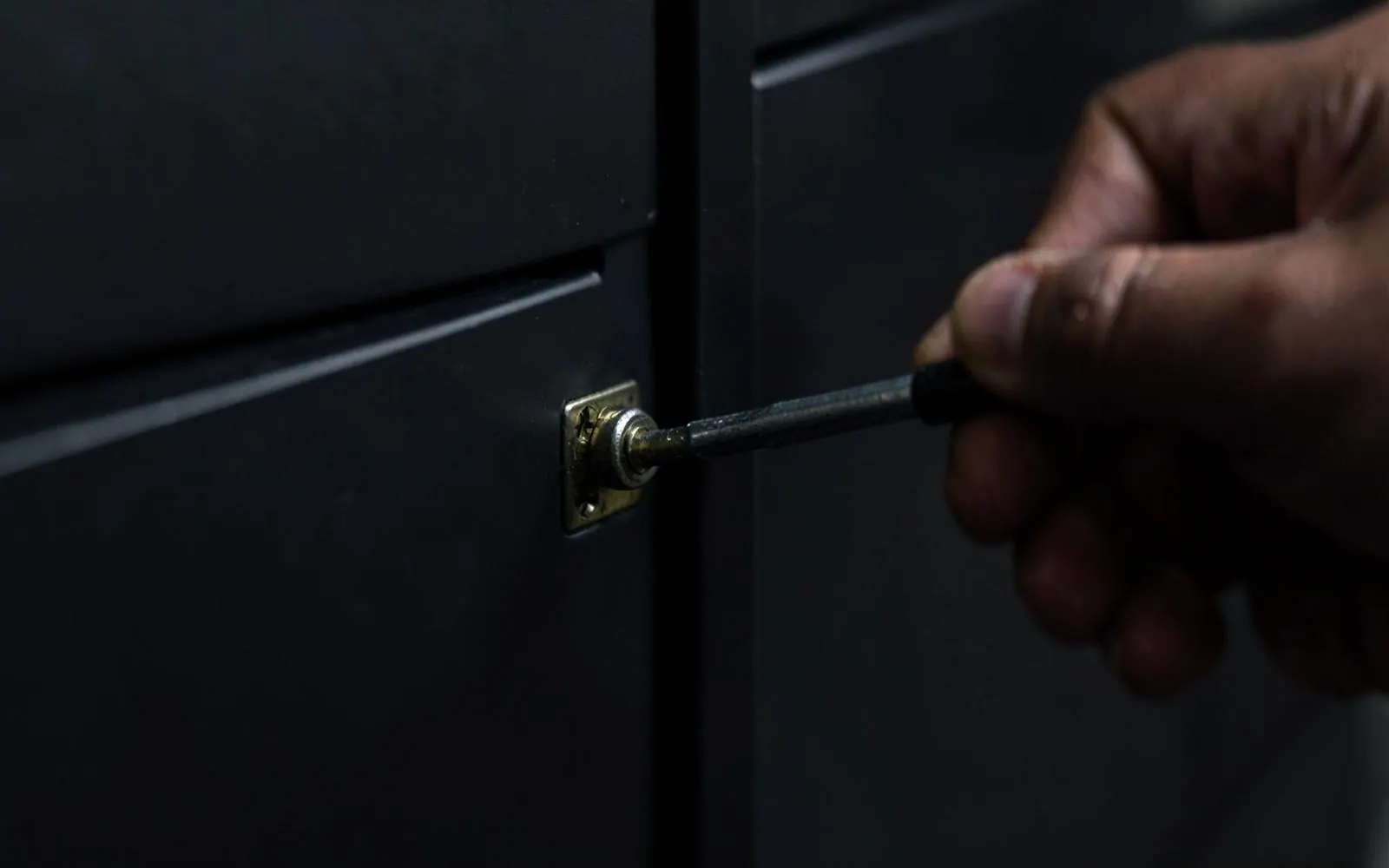
Adjustment is not a closing formality — it is a separate phase that needs time and quiet. A 1-millimetre inconsistency left in a rush across a 2.4-metre front becomes an obvious line. We adjust under the same lighting the room will use every day.
7. Undocumented decisions
If a decision is not in a photo or a report, it does not exist in the project. A verbal agreement in the corridor becomes two different versions a month later. Documentation protects both the client and the fitter, and usually takes two minutes.